Overview
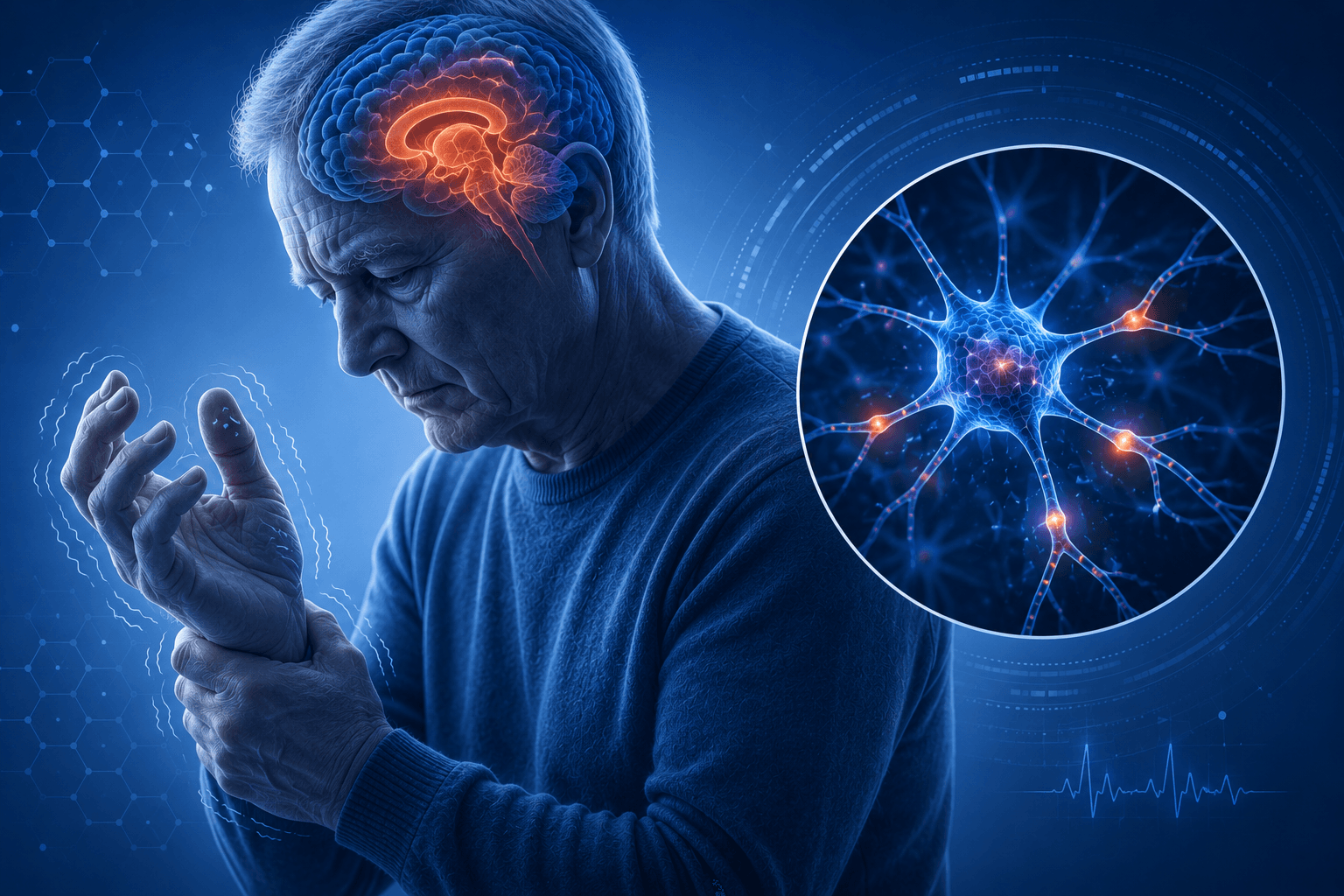
Parkinson’s disease affects brain networks that help control movement. Common features include resting tremor, muscle stiffness, slowed movements (bradykinesia), and changes in posture or gait. Non-movement symptoms such as sleep change, constipation, mood shifts, or reduced sense of smell can also occur in some people.
Tremor means rhythmic shaking. Not every tremor is Parkinson’s disease. Essential tremor and other movement disorders can look similar to bystanders. Distinguishing them requires clinical assessment over time.
This page offers general education. It cannot diagnose Parkinson’s disease or predict progression. Treatment plans are personal and must be set with a clinician.
Key Takeaways
- Parkinson’s disease and other tremor conditions can look alike at first.
- Diagnosis is mainly clinical—based on history and examination over time.
- Tremor, stiffness, and slowed movement are core motor themes in Parkinson’s disease.
- Falls, sudden severe immobility, or new neurological emergencies need urgent care.
- Website information cannot replace personal neurological assessment.
- Long-term follow-up helps adjust care as needs change.
Symptoms
Symptoms often begin gradually and may start on one side of the body. Not every person has every symptom. Family observations about walking, handwriting, and facial expression can be helpful.
- Tremor at rest—often starting in one hand
- Action or posture tremor in other tremor disorders (pattern differs from resting tremor)
- Stiffness or rigidity in arms, legs, or neck
- Slowed movements, smaller handwriting, or reduced arm swing
- Shuffling gait, stooped posture, or balance difficulty
- Soft voice or reduced facial expression in some people
- Sleep disturbance, constipation, mood change, or reduced smell in some cases
- Symptoms that slowly progress over months to years rather than minutes
Causes
Parkinson’s disease relates to changes in brain cells involved in movement control, including pathways that use dopamine. In most people, a single clear external cause is not identified. Ageing and a mix of genetic and environmental influences may contribute in complex ways.
Tremor has many causes. Essential tremor often runs in families and typically appears with posture or action. Medicine effects, thyroid problems, and other neurological conditions can also cause shaking.
Your neurologist works through these possibilities using history and examination. Imaging or other tests are used selectively, not as a routine website checklist.
Risk Factors
Risk factors raise probability but do not determine destiny. Many people with risk factors never develop Parkinson’s disease, and some people develop it without a clear risk profile.
- Increasing age
- Family history in some people
- Certain genetic variants identified in specialised settings
- Selected environmental exposures discussed in research (context-dependent)
- Other medical and neurological factors your clinician may consider
Diagnosis
Diagnosis of Parkinson’s disease is primarily clinical. A neurologist looks for combinations of slowed movement with tremor or rigidity, reviews how symptoms began, and examines walking, tone, and tremor pattern. Response to treatment over time can also support the diagnosis in some people.
There is no single clinic blood test that confirms Parkinson’s disease. Brain imaging or other investigations may be used to look for alternative explanations when the picture is atypical.
Essential tremor and Parkinsonian tremor are distinguished by timing (action vs rest), associated features, and examination—not by website self-tests.
Treatment Options
Care is long-term and individual. Plans may include education, physiotherapy and exercise themes, fall-prevention strategies, and medicines when clinically appropriate. Some people later discuss advanced options with specialists if symptoms become harder to manage.
This website does not list medicine names, doses, or guaranteed outcomes. Never start, stop, or change prescription medicines based on website information alone.
Tremor care depends on the underlying diagnosis. What helps one tremor type may not help another.
Living With This Condition
Living with Parkinson’s disease or chronic tremor often involves adapting daily routines, staying active within safe limits, and planning follow-up. Support from family and therapy services when available can improve day-to-day function.
- Keep a symptom and medicine-timing diary for clinic visits
- Ask about exercise programmes suited to balance and mobility
- Reduce fall hazards at home; use lighting and sturdy footwear
- Discuss voice, swallowing, sleep, and mood concerns openly
- Plan appointments when symptoms are typical for you, if advised
- Involve caregivers in education when helpful
Recovery and Follow-up
Parkinson’s disease is usually managed as a long-term condition rather than a one-time cure. Goals focus on function, comfort, safety, and quality of life over time. Follow-up intervals depend on symptom control and new concerns.
Bring medicine lists, prior notes, and observations from family to each visit. Educational materials on this site support learning but cannot predict your personal course.
When to Seek Emergency Medical Care
Most Parkinson’s and tremor symptoms develop slowly and are managed in clinic. Some situations still need urgent or emergency care. Do not use a routine online appointment request for emergencies.
- Sudden inability to move or severe sudden worsening with fever or infection signs
- Falls with head injury, fracture concern, or inability to get up
- New stroke-like symptoms: face droop, arm weakness, or speech difficulty
- Severe swallowing difficulty with choking or breathing problems
- Chest pain, severe breathlessness, or loss of consciousness
- Prolonged seizure or other clear emergency neurological features
When to See a Neurologist
Neurological assessment helps distinguish Parkinson’s disease from other tremor and movement disorders and guides long-term care planning.
- New or progressive tremor, stiffness, or slowed movement
- Walking or balance changes of neurological concern
- Unclear tremor diagnosis after initial assessment
- Need for structured Parkinson’s disease follow-up
- Non-motor symptoms affecting sleep, mood, or daily function alongside motor signs
- Coordination of longer-term movement-disorder care in Swat
What to Expect at Consultation
Dr. Amjad Iqbal typically reviews how symptoms began, which activities are affected, medicines, and medical background, then examines tremor pattern, tone, speed of movement, and walking. Together you can discuss diagnosis possibilities and a follow-up plan.
Bring a medicine list, prior reports, and a short video of tremor or walking if available. If sudden stroke-like or emergency symptoms occur, seek emergency care first.
Questions to Ask Your Doctor
- Do my symptoms suggest Parkinson’s disease, essential tremor, or another cause?
- What examination findings are most important in my case?
- Do I need any tests now, or is clinical follow-up enough?
- What exercise and fall-prevention steps fit my situation?
- How often should I return for review?
- Which warning signs mean I should seek urgent care?
- What should my family watch for at home?
Frequently Asked Questions
Is every hand tremor Parkinson’s disease?
No. Essential tremor and other conditions are common. A neurologist distinguishes them by history and examination, sometimes over more than one visit.
Is there a blood test that confirms Parkinson’s disease?
No single routine blood test confirms it. Diagnosis is mainly clinical. Tests are used when needed to look for other explanations.
Does Parkinson’s disease always start with tremor?
No. Some people notice stiffness, slowed movement, or walking change first. Patterns vary between individuals.
Can exercise help?
Many people benefit from regular, safe activity and physiotherapy themes as part of overall care. Exercise plans should fit your balance and mobility and do not guarantee a specific outcome.
Will treatment cure Parkinson’s disease?
There is no promised cure on this website. Care aims to improve function and comfort over time. Results vary and must be discussed personally with your clinician.
How is essential tremor different?
Essential tremor often appears with posture or action and may run in families, while Parkinsonian tremor is more often noticeable at rest and comes with other motor features. Only clinical assessment can clarify your pattern.
When should I go to emergency care?
Seek emergency care for stroke-like symptoms, serious falls with injury, sudden severe immobility with concerning systemic signs, choking with breathing difficulty, or other emergencies. Do not rely on a routine website appointment request.
Emergency warning signs
Seek emergency care immediately for sudden weakness, difficulty speaking, seizures, loss of consciousness, severe sudden headache, or other urgent symptoms. This page is for education only and is not a substitute for emergency assessment.
Read medical disclaimer →