Overview
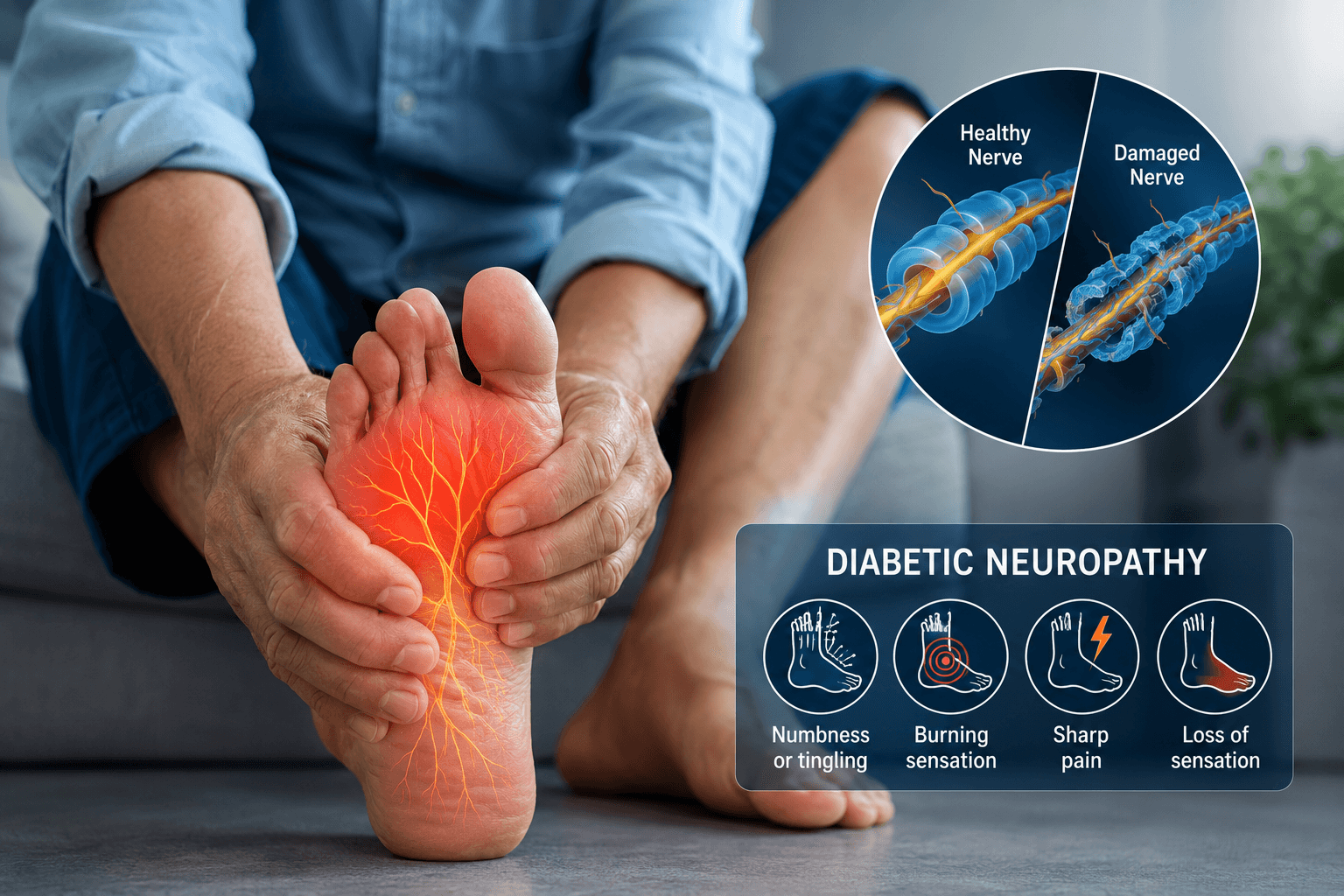
Peripheral nerves carry signals for sensation, movement, and some automatic body functions. When these nerves are irritated, compressed, or damaged, people may feel pain, numbness, tingling, burning, or weakness. Symptoms may affect one nerve, several nerves, or many nerves in a length-dependent pattern (often feet first).
Neuropathy has many possible causes, including diabetes and other metabolic problems, vitamin deficiencies, toxin exposures, immune conditions, infections, inherited factors, or pressure on a nerve. Sometimes a clear cause is not found even after careful evaluation.
This page provides general education. It cannot diagnose your symptoms or prescribe treatment. Sudden severe weakness, bowel/bladder changes with back pain, or rapidly progressive deficits need urgent medical assessment.
Key Takeaways
- Neuropathy symptoms often include numbness, tingling, burning, or weakness.
- Diabetes and other medical conditions are common contributors—but not the only ones.
- Nerve conduction studies and EMG may help when clinically appropriate.
- Not every tingling sensation is neuropathy; assessment clarifies the pattern.
- Rapidly progressive weakness or red-flag spine symptoms need urgent care.
- This information is educational and does not replace personal medical advice.
Symptoms
Symptoms depend on which nerves are involved. Sensory nerves, motor nerves, or both may be affected. Keep notes on where symptoms start, what makes them better or worse, and whether they progress.
- Numbness, pins-and-needles, or reduced feeling in feet, legs, hands, or arms
- Burning, stabbing, or electric-shock–like pain
- Increased sensitivity to light touch or temperature
- Weakness, clumsiness, or foot drop in some people
- Balance difficulty, especially in the dark or on uneven ground
- Muscle cramps or twitching in selected cases
- Symptoms that are worse at night for some individuals
- Autonomic features (such as unusual sweating or blood-pressure related symptoms) in some neuropathies—discuss with a clinician
Causes
Many processes can injure peripheral nerves. Metabolic conditions such as diabetes are frequent contributors worldwide. Other causes include nutritional deficiencies, alcohol-related injury, certain medicines or toxins, immune-mediated nerve inflammation, infections, inherited neuropathies, and compression of a nerve root or peripheral nerve.
Back or neck nerve-root compression can cause radiating pain, numbness, or weakness that may overlap with neuropathy symptoms. Distinguishing these patterns is part of neurological assessment.
Your clinician determines likely causes after history, examination, and selected tests—not from website checklists alone.
Risk Factors
Risk factors raise the chance of nerve problems but do not guarantee them. Some people develop neuropathy without an obvious risk profile.
- Diabetes or prediabetes
- Long-standing alcohol use (as assessed clinically)
- Vitamin deficiencies identified on medical testing
- Kidney, thyroid, or other chronic medical conditions in some people
- Occupational or posture-related nerve pressure
- Prior chemotherapy or other medicine exposures (context-dependent)
- Family history of neuropathy in selected inherited forms
- Other factors your doctor may identify during evaluation
Diagnosis
Assessment usually includes a detailed symptom history and neurological examination of strength, reflexes, and sensation. Blood tests may look for common reversible contributors when indicated.
Nerve conduction studies (NCS) and electromyography (EMG) can help characterise nerve and muscle function when the clinical picture suggests they will change management. Not every person with tingling needs these tests immediately.
Imaging of the spine or other structures is considered when examination suggests nerve-root or structural problems. Test choices are individual.
Treatment Options
Treatment aims to address contributing causes where possible, support symptom comfort, protect feet and skin when sensation is reduced, and maintain function. Plans are personal and may involve medical care, physiotherapy themes, footwear advice, and follow-up.
This website does not list medicine names, doses, or guaranteed pain outcomes. Never start, stop, or change prescription medicines based on website information alone.
If a compressive or inflammatory cause is found, your clinician will discuss the appropriate pathway for your situation.
Living With This Condition
Living with neuropathy often means balancing activity, foot care, sleep, and pain coping strategies while treating underlying contributors. Progress varies. Small daily habits can reduce injury risk when sensation is impaired.
- Inspect feet daily if sensation is reduced; wear protective footwear
- Manage blood sugar and other chronic conditions as advised by your medical team
- Use night lights and clear walkways if balance is affected
- Discuss exercise and physiotherapy options that fit your ability
- Keep a symptom diary for follow-up visits
- Ask about mood and sleep—chronic nerve pain can affect both
Prevention
Not all neuropathy is preventable. For many people, good control of diabetes and other metabolic risks, avoiding known toxin exposures when possible, and protecting nerves from prolonged pressure may help reduce risk. These steps cannot guarantee that neuropathy will never develop or progress.
Personal prevention plans should be set with your clinicians based on your health background.
When to Seek Emergency Medical Care
Most chronic neuropathy symptoms are not emergencies, but some patterns need urgent assessment. Do not use a routine online appointment request for emergency features.
- Sudden or rapidly progressive leg or arm weakness
- New bowel or bladder control problems with back pain or leg symptoms
- Numbness spreading quickly with difficulty walking
- Signs of serious infection in a numb foot (spreading redness, fever, rapidly worsening wound)
- Chest pain, severe breathlessness, or other medical emergency symptoms—call emergency services
- Falls with head injury or inability to get up
When to See a Neurologist
Neurological consultation can help clarify whether symptoms reflect neuropathy, nerve-root compression, or another cause, and whether NCS/EMG or further tests are appropriate.
- Persistent numbness, tingling, burning pain, or weakness
- Symptoms interfering with walking, sleep, or work
- Unclear diagnosis after initial medical assessment
- Need for nerve conduction studies or EMG discussion
- Progressive deficits or asymmetric patterns of concern
- Coordination of longer-term neuropathy care in Swat
What to Expect at Consultation
Dr. Amjad Iqbal typically reviews your symptom timeline, medical background, medicines, and examination findings, then discusses whether blood tests, NCS/EMG, or imaging are useful. You can also review safety steps for numb feet and activity limits.
Bring prior lab results, diabetes records if relevant, imaging reports, and a list of medicines and supplements.
Questions to Ask Your Doctor
- Do my symptoms sound like peripheral neuropathy or another nerve problem?
- Which tests are most useful for me right now?
- What underlying causes should we look for first?
- How can I protect my feet and reduce fall risk?
- What follow-up schedule do you recommend?
- Which warning signs mean I should seek urgent care?
- Are there activity or work adjustments I should consider?
Frequently Asked Questions
Is all tingling caused by neuropathy?
No. Tingling can come from nerve-root compression, circulation issues, anxiety-related hyperventilation, medicine effects, and other causes. Clinical assessment clarifies the likely source.
Do I always need EMG and nerve conduction studies?
Not always. These tests are helpful in selected cases when they will refine diagnosis or management. Your neurologist decides based on examination and history.
Can diabetes-related neuropathy improve?
Some people stabilise or improve when contributing factors are addressed, but results vary and cannot be promised. Plans are individual.
Why are my feet affected first?
Many neuropathies affect the longest nerves first, so feet and toes often show early sensory symptoms. Patterns differ, so examination still matters.
Is nerve pain the same as muscle pain?
Not always. Nerve pain often has burning, electric, or tingling qualities, while muscle pain may feel sore or cramping. Overlap exists, and clinicians distinguish them by history and exam.
When is neuropathy an emergency?
Seek urgent care for rapidly progressive weakness, bowel/bladder changes with spinal symptoms, serious foot infections in numb limbs, or other emergency medical signs. Do not rely on a routine website booking for those situations.
Can lifestyle changes help?
Healthy routines and medical risk-factor care can support nerve health for many people, but they do not guarantee prevention or recovery. Discuss a plan that fits your health needs with your clinicians.
Emergency warning signs
Seek emergency care immediately for sudden weakness, difficulty speaking, seizures, loss of consciousness, severe sudden headache, or other urgent symptoms. This page is for education only and is not a substitute for emergency assessment.
Read medical disclaimer →